
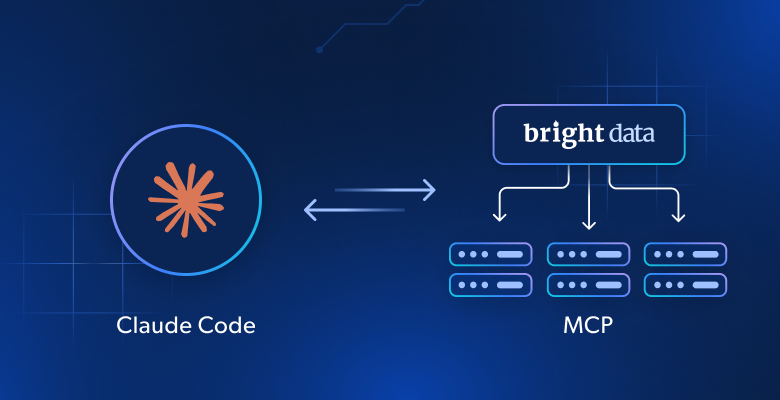
Claude Code and MCP Architecture: Standardizing AI-Driven Engineering Context
A deep technical analysis of Claude Code, the Model Context Protocol (MCP), agentic search methodologies, transport mechanisms, and AI model providers for engineers, AI professionals, and system architects.
Modern software engineering demands tight integration between artificial intelligence systems and local development environments. Anthropic developed Claude Code as an interactive, CLI-based AI coding assistant that reads, writes, and executes code directly within a developer's environment.
This technical specification details the architecture, core concepts, transport mechanisms, and practical deployment workflows of Claude Code and MCP. Engineers can use this reference to deploy Claude Code across macOS, Windows, and Unix operating systems while securely managing data access via local Stdio or remote HTTP connections.
Overview
The integration of artificial intelligence into software development necessitates direct, authenticated access to developer tools, codebases, and organizational data. Claude Code solves this by acting as an AI agent operating directly within local environments — it parses project structures, navigates directories, and manipulates files across macOS, Windows, and Unix systems.
Claude Code utilizes the Model Context Protocol (MCP) to securely interface with external tools, APIs, and data sources. MCP acts as an open standard enabling secure, two-way connections between AI applications and data repositories. Developers distribute and install MCP servers via a Marketplace or package managers like NPM.
System architects can access the foundational models through direct API endpoints, such as the Anthropic API, or through enterprise-grade cloud services like Amazon Bedrock and Google Vertex. This architecture ensures AI agents possess both contextual awareness for complex problem-solving and strict security boundaries required by enterprise environments.
Core Concepts
Claude Code
Claude Code operates as an interactive, CLI-based AI coding assistant. Unlike passive code generation tools, Claude Code functions as an autonomous AI agent designed to assist developers by interacting directly with their local environments and codebases.
Claude Code leverages specific command-line utilities to deeply analyze project structures. It actively executes tools like grep alongside filesystem traversal — the programmatic process of navigating through directories and files to read project structures — across macOS, Windows, and Unix operating systems.
The assistant requires a foundational AI model: it can be powered by models on the Anthropic API, or enterprise alternatives like Amazon Bedrock (a fully managed AWS service) or Google Vertex (Google Cloud's machine learning platform for enterprise AI).
Model Context Protocol (MCP)
The Model Context Protocol (MCP) represents a paradigm shift in how AI applications consume data. MCP is an open protocol that standardizes how AI applications connect to and consume data from external tools and services securely.
Before MCP, AI integrations required custom, brittle integrations for every new data source. MCP standardizes context provisioning for AI agents — enabling secure, two-way connections between AI models and local or remote data sources.
Developers interact with external systems — such as GitHub (version control and collaboration) or Figma (collaborative interface design) — through dedicated MCP servers acting as standardized translation layers, eliminating the need to hardcode API integrations for every external platform.
CLAUDE.md
To enforce project-specific architectural paradigms, Claude Code relies on CLAUDE.md — a markdown-based configuration file that provides project-specific instructions, architectural guidelines, and context to Claude Code.
It instructs Claude Code on repository-specific conventions, commands, and rules. For instance, a project utilizing React (a JavaScript library for building UIs known for its component-based architecture, JSX utilization, and NPM ecosystem) will have different rules than a project using Vue (an approachable JavaScript framework utilizing a reactive data model and Single-File Components). Claude Code reads CLAUDE.md and adheres strictly to the architectural rules defined within it.
Information Retrieval Methodologies
Claude Code utilizes different methodologies to acquire information depending on the complexity of the task and MCP server configuration. The architecture supports both RAG and Agentic Search.
Retrieval-Augmented Generation
RAG is an architecture methodology that grounds AI models by providing them with external, retrieved information to improve response accuracy. It typically functions as a single-step vector search — fast, passive ingestion of retrieved context before the AI generates a response.
Best for: Static knowledge bases and documentation repositories where speed and minimal overhead are priorities.
Agentic Search
Agentic Search is an architecture methodology where an AI agent autonomously formulates queries, evaluates results, and refines searches to achieve a goal. It relies on multi-step iterative searches using grep and filesystem traversal.
Best for: Complex debugging and legacy code modernization where active query formulation is required to trace dependencies.
Distribution and Discovery: The Role of NPM and the Marketplace
For Claude Code and MCP to function effectively across varied engineering environments, there must be a standardized mechanism for distributing, discovering, and installing MCP servers. This lifecycle is primarily managed through the Marketplace and NPM.
The Marketplace acts as a centralized directory where developers can discover, share, and evaluate MCP servers built by the community or enterprise vendors. Because MCP standardizes connections, any server listed is guaranteed to be interoperable with Claude Code.
Once an appropriate MCP server is discovered, distribution and installation are handled predominantly via NPM — the default package manager for the JavaScript runtime environment Node.js. Installing a complex MCP translation layer is as simple as executing a standard npm install command.
Architecture
The MCP and LSP Connection
MCP standardizes context provisioning for AI agents in a manner conceptually similar to how the Language Server Protocol (LSP) standardized code analysis for IDEs. LSP is a protocol defining the communication between an editor and a language smartness provider — enabling features like autocomplete and go-to-definition.
Where LSP standardizes M-to-N connections for code analysis between editors and language servers, MCP standardizes M-to-N connections for context and tool access between AI agents and data sources. This allows developers to build a single MCP server consumable by any compliant AI application, just as a single Language Server can serve multiple IDEs.
Transport Mechanisms: Stdio vs SSE
MCP supports multiple transport mechanisms to ensure flexibility across local and network environments.
Stdio (Standard Input/Output)
MCP servers execute locally, spawned as child processes by the client. No network ports are opened — all data exchange happens through standard input/output streams within the local OS.
- Highly secure — zero network egress
- Ideal for local databases and personal tools
- Single-user, local environment only
SSE (Server-Sent Events) over HTTP
MCP uses SSE over HTTP for remote, network-based server execution. SSE is a push technology enabling a client to receive automatic updates from a server via HTTP — ideal for shared, centralized environments.
- Multi-user, shared tool accessibility
- Centralized databases and wikis
- Requires network access
AI Model Providers
Claude Code acts as the agentic interface and orchestrator; however, the cognitive capabilities are powered by foundation models accessed via three primary providers, each catering to different security and infrastructural requirements.
Anthropic API
Direct interface to access Anthropic's foundation models. Features straightforward billing and standard API key authentication.
Best for: Individual devs & startups
Amazon Bedrock
A fully managed AWS service offering high-performing foundation models. Secures connections using IAM role security with enterprise AWS integration.
Best for: AWS-invested enterprises
Google Vertex
A machine learning platform by Google Cloud providing access to enterprise AI models. Fits seamlessly into existing MLOps pipelines.
Best for: GCP-integrated organizations
Comparison Matrix Analysis
When architecting workflows with Claude Code and MCP, system designers must make critical decisions regarding their technological stack. The following matrix breaks down the primary architectural choices.
| Category | Option A | Option B | Decision Factor |
|---|---|---|---|
| Frontend Framework | React (JSX, NPM ecosystem) | Vue (SFCs, reactive data model) | Ecosystem size vs. approachability |
| MCP Transport | Stdio (local, no network ports) | SSE/HTTP (remote, multi-user) | Security vs. multi-user scale |
| Retrieval Method | RAG (single-step vector search) | Agentic Search (multi-step iterative) | Speed vs. depth of analysis |
| AI Model Provider | Anthropic API (direct, API keys) | Bedrock / Vertex (IAM / MLOps) | Simplicity vs. enterprise compliance |
Use Cases
Automated Pull Request Review
Development teams utilize Claude Code to automate complex code reviews within CI/CD pipelines via GitHub Actions. Triggered by a new Pull Request, Claude Code connects to a dedicated GitHub MCP server, reads the diffs, and executes Agentic Search across the local Unix environment to evaluate the impact on the broader codebase.
Finally, utilizing models accessed via the Anthropic API, Claude Code generates and leaves highly contextualized inline comments on the Pull Request.
Legacy Code Modernization
A common scenario involves migrating older web applications to modern frameworks, such as migrating a Vue 2 application to React. A developer creates a CLAUDE.md file explicitly specifying functional components and React Hooks.
Claude Code executes Agentic Search via filesystem traversal and grep to autonomously map all old Vue components and their dependencies. Reading CLAUDE.md, it then generates new React code — seamlessly translating Vue templates into React Hooks.
Enterprise RAG and Knowledge Retrieval
An enterprise deploys an internal Wiki MCP Server using SSE over HTTP — appropriate for a shared, multi-user environment. Developers query company documentation via Claude Code in their local CLI, triggering a RAG workflow for fast, single-step vector search.
Claude Code is configured to use Amazon Bedrock as its AI model provider, ensuring all queries authenticate securely using AWS IAM roles, keeping enterprise data protected.
Step-by-Step Scenario Analysis
Providing Codebase Rules with CLAUDE.md
-
1
Configuration: A developer creates a CLAUDE.md file specifying all generated code must use functional components and React Hooks.
-
2
Initialization: Claude Code boots the interactive CLI and autonomously parses the local filesystem for configuration files, discovering and reading CLAUDE.md.
-
3
Execution: When prompted to build a new data-table view, Claude Code bypasses class-based components entirely and generates code perfectly formatted to the functional component and React Hook guidelines.
Design to Code with Figma and Vue
-
1
Marketplace & NPM Setup: Developer discovers a Figma MCP server in the Marketplace and installs it via NPM.
-
2
Connection: Claude Code connects securely to the Figma MCP server with the prompt: “Implement the login screen from my Figma file in Vue.”
-
3
Data Ingestion: MCP connection requests layout parameters, design tokens, and CSS properties from the Figma server.
-
4
Code Generation: With exact dimensions and layout metrics in context, Claude Code generates Vue Single-File Components mapping the visual layout to Vue's reactive data model.
Local Tool Execution and Secure Database Access
-
1
Server Initialization: Developer starts a local MCP server configured to use Stdio — appropriate because the target is a sensitive local database containing PII.
-
2
Process Spawning: Claude Code executes the MCP server as a child process within the local OS — macOS, Windows, or Unix.
-
3
Secure Querying: Claude Code communicates entirely over Stdio streams. It queries the database structure, evaluates the schema, and generates SQL — with zero network ports opened throughout the entire process.
Best Practices
Enforce Architecture via CLAUDE.md
Always include a CLAUDE.md file in the root of your React or Vue projects. This ensures Claude Code adheres to your specific architectural paradigms and uses the correct package manager preferences, such as NPM.
Secure Local Tooling with Stdio
Default to Stdio for internal data or personal developer tools. Spawning the server locally as a child process ensures strict security and requires zero network configuration. Only move to SSE/HTTP for remote or shared deployments.
Leverage Agentic Search for Complex Debugging
Use Agentic Search instead of simple RAG for complex debugging. Give Claude Code permission to use grep and filesystem traversal autonomously — this allows iterative codebase searches that a passive RAG vector search would miss.
Secure CI/CD Integrations
When integrating Claude Code with CI/CD platforms like GitHub Actions, abandon hardcoded API keys. Use enterprise cloud model providers like Amazon Bedrock or Google Vertex with tightly scoped IAM roles for enterprise-grade security.
Frequently Asked Questions
What is the difference between MCP and LSP?
LSP standardizes how IDEs receive language-specific features (like autocomplete and go-to-definition) from language servers. MCP standardizes how AI agents (like Claude Code) receive context and tool access from data sources. While LSP focuses on code analysis and editor smartness, MCP focuses on securely provisioning data and tools to AI foundation models.
How does Claude Code connect to GitHub and Figma?
Claude Code connects to these platforms using dedicated MCP servers. The GitHub MCP server exposes issues and Pull Requests, while the Figma MCP server exposes design tokens and layouts. These MCP servers act as standardized translation layers, converting the specific APIs of GitHub and Figma into the open Model Context Protocol that Claude Code natively understands.
Can I run Claude Code on any operating system?
Yes. Claude Code is designed to run in the terminal on macOS, Windows, and Unix-based operating systems. It supports filesystem traversal and native command-line utilities like grep across all these environments.
How do I enforce coding standards when Claude Code generates React or Vue code?
Create a CLAUDE.md file in the root of your project. Inside this markdown-based configuration standard, explicitly define your architectural rules: component types, naming conventions, framework-specific requirements, linting rules, and build commands. Claude Code reads and strictly adheres to these rules before generating or modifying any code.